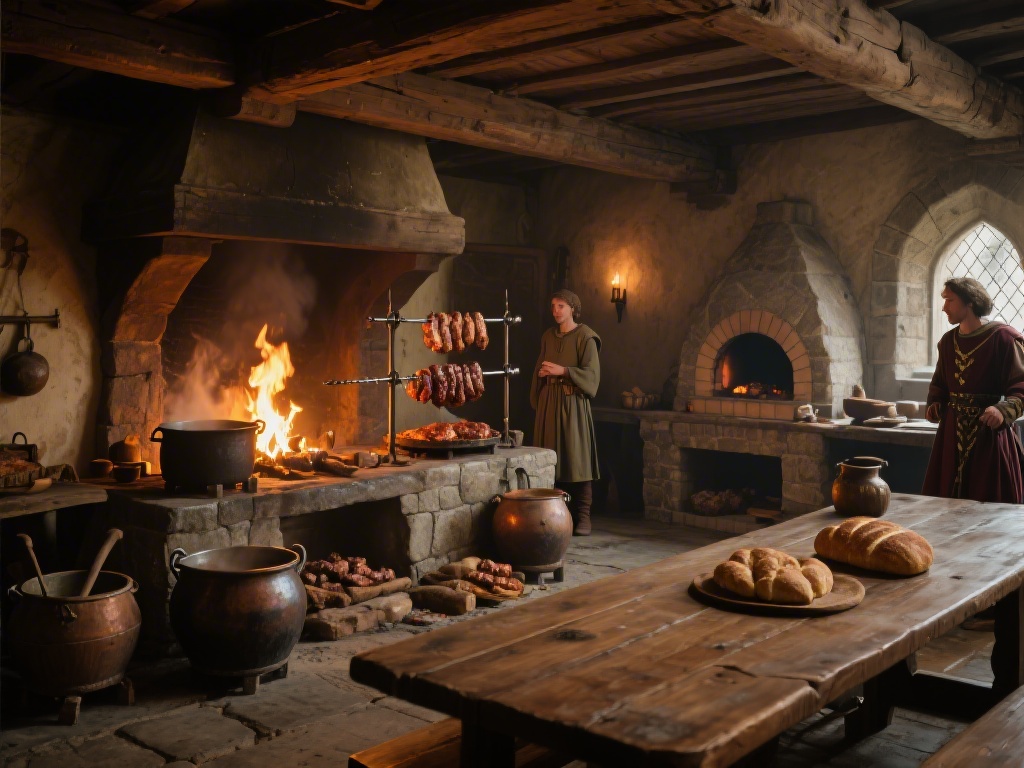
Introduction to Dark Ages Cooking
The Dark Ages, also known as the Middle Ages, spanned from the 5th to the 15th century. During this period, people relied on traditional cooking and food preservation methods to sustain their families. These methods were shaped by the limited availability of resources and the need to store food for extended periods.
Traditional Cooking Techniques
In the Dark Ages, cooking was a communal activity, often performed over an open fire. The primary cooking methods included boiling, roasting, and baking. Boiling was the most common method for preparing vegetables, grains, and meats. Roasting was used for meats, and baking was employed for bread and cakes.
One of the key ingredients in Dark Ages cooking was salt. Salt was not only used as a flavor enhancer but also as a preservative. It helped to prevent the growth of bacteria and extend the shelf life of food.
Food Preservation Techniques
Food preservation was crucial during the Dark Ages, as refrigeration and modern preservation methods were not available. People relied on various techniques to keep their food fresh and edible for longer periods.
One of the most common preservation methods was drying. Fruits, vegetables, and meats were dried in the sun or over a fire. This process removed the moisture, making the food less susceptible to spoilage. Dried foods could be stored for months and rehydrated when needed.
Another popular preservation method was salting. Salt was used to preserve meats, fish, and vegetables. The salt drew out the moisture, creating an environment where bacteria couldn't survive. Salted meats, known as jerky, were a staple in the Dark Ages diet.
Fermentation was another important preservation technique. Fermented foods, such as sauerkraut and yogurt, were created by introducing bacteria to the food. This process not only preserved the food but also added a unique flavor.
Personal Experience
I recently had the opportunity to recreate a Dark Ages meal at a medieval festival. We started by foraging for wild herbs and vegetables, which were then used to prepare a simple stew. The flavors were bold and earthy, reminiscent of the Dark Ages cuisine.
One of the most intriguing experiences was trying to preserve our food using traditional methods. We dried fruits and vegetables, salted meats, and fermented some vegetables. It was fascinating to see how these ancient techniques could still be effective today.
Conclusion
Dark Ages cooking and food preservation techniques offer a glimpse into the past, showcasing the ingenuity and resourcefulness of our ancestors. While modern technology has made our lives easier, it's still fascinating to explore the culinary heritage of the Dark Ages.